Hand Mixer vs Stand Mixer: Which One Do You Actually Need?
Quick Answer: Choosing between a hand mixer vs stand mixer comes down to how often you bake and what you bake. A hand mixer handles 90% of home baking tasks — cookies, cakes, whipped cream, mashed potatoes — for a fraction of the cost and storage space. A stand mixer only earns its counter space if you bake more than once a week, make bread dough regularly, or need hands-free mixing. Don’t upgrade until you actually need to.
This post contains affiliate links. If you buy through them, I may earn a small commission at no extra cost to you — it’s what keeps this site running and lets me keep testing gear so you don’t have to.
The Mistake Most Beginners Make
Here’s what happens: someone starts baking, watches a few YouTube videos, sees every baker using a KitchenAid, and decides they need a $300 stand mixer before they’ve made their second batch of cookies.
Three months later, that stand mixer is sitting on the counter collecting dust because they only bake twice a month and everything they make — cookies, brownies, the occasional cake — works perfectly fine with a hand mixer.
I made this mistake. I bought a stand mixer way too early, used it for six months, and realized I was pulling out my hand mixer more often because it was faster to grab, easier to clean, and handled everything I was actually baking. The stand mixer didn’t become essential until I started making bread every week.
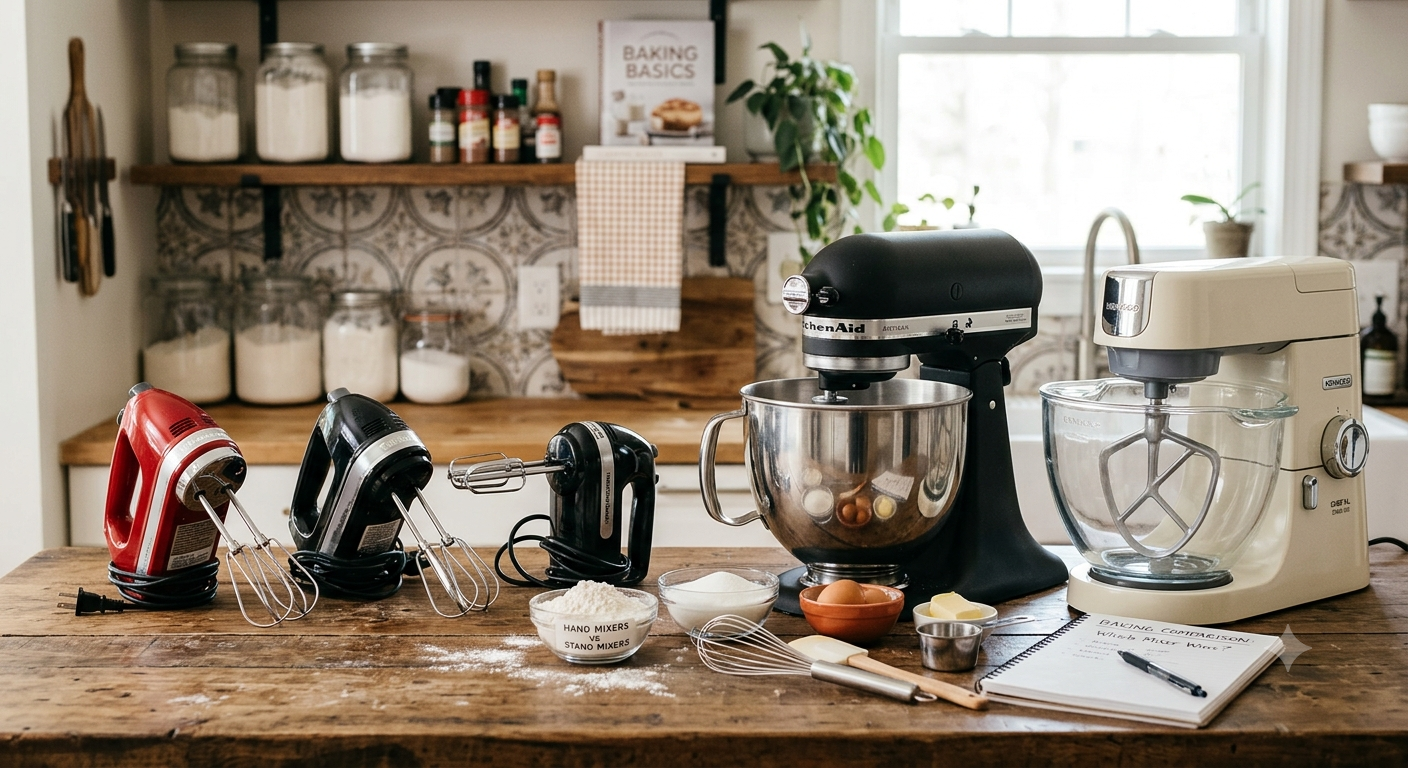
The goal of this post isn’t to sell you the most expensive option. It’s to help you figure out which mixer is the right one for where you are right now. That is why I created this hand mixer vs stand mixer comparison table.
Hand Mixer vs Stand Mixer: The Honest Comparison
| Factor | Hand Mixer | Stand Mixer |
|---|---|---|
| Price | $20–80 | $60–450 |
| Motor power | 150–250 watts | 250–500+ watts |
| Weight | 2–4 lbs | 10–25+ lbs |
| Storage | Fits in a drawer | Lives on your counter |
| Hands-free mixing | No — you hold it the entire time | Yes — set it and walk away |
| Bread dough | Struggles or can’t handle it | Handles it confidently |
| Whipping cream/eggs | Excellent | Excellent |
| Cookie dough | Good | Excellent |
| Cake batter | Excellent | Excellent |
| Cleanup | Quick — detach beaters, wipe, done | More parts — bowl, attachments, head |
| Attachments | Beaters, sometimes a whisk | Dough hook, whisk, paddle, plus optional add-ons |
| Noise | Moderate to loud | Moderate |
When a Hand Mixer Is All You Need
A hand mixer vs is the right choice if any of these describe you:
You bake a few times a month. If you’re making cookies for the office, a birthday cake once in a while, or whipping cream for dessert, a hand mixer does all of that without breaking a sweat. There’s no reason to spend $200+ on a machine you’ll use twice a month.
You don’t make bread. This is the single biggest dividing line. A hand mixer handles 90% of baking tasks — cookies, cakes, whipped cream, and mashed potatoes. The one thing it can’t do well is knead heavy bread dough. If bread isn’t in your plans, a hand mixer covers everything else.
You have a small kitchen. Hand mixers fit in a drawer. Stand mixers claim permanent counter real estate. In a small apartment kitchen, that counter space matters.
You’re on a budget. A solid hand mixer costs $20–60. That same money spent on a stand mixer gets you something underpowered and disposable. If your budget is under $100, a quality hand mixer is a better investment than a cheap stand mixer that’ll burn out in six months. We covered this in detail in our post on baking tools not worth buying.
You value speed and convenience. Grab a hand mixer from the drawer, plug it in, use any bowl you want, detach the beaters, rinse, and put it away. Total cleanup time: 60 seconds. A stand mixer involves assembling, locking the bowl, attaching the right beater, mixing, unlocking, disassembling, and washing multiple heavy parts.
When It’s Time to Upgrade to a Stand Mixer
A stand mixer becomes worth the investment when:
You bake more than once a week. At this frequency, the convenience of hands-free mixing starts to matter. You can cream butter and sugar in the stand mixer while you measure dry ingredients. You can whip egg whites while you prep the rest of the recipe. The multitasking advantage compounds over time.
You make bread, pizza dough, or pasta. This is the breaking point for most bakers. Bread dough requires sustained kneading — 8 to 10 minutes of continuous mixing at moderate speed. A hand mixer’s motor can’t handle that without overheating, and your arm definitely can’t. A stand mixer with a dough hook does it effortlessly.
You make large batches. Double batches of cookie dough, big birthday cakes, holiday baking marathons — a stand mixer’s larger bowl and stronger motor handle volume that would exhaust both a hand mixer and your arm.
Your hand mixer is struggling. If your hand mixer slows down during thick cookie dough, overheats during long mixing sessions, or sounds strained when you push it, that’s the machine telling you it’s reached its limit. Listen to it.
You want the attachment ecosystem. Stand mixers — especially KitchenAid — offer hub-powered attachments that turn the mixer into a pasta maker, meat grinder, spiralizer, ice cream maker, and more. If those appeal to you, the stand mixer pays for itself by replacing multiple appliances.
The Best Hand Mixers
If you’ve decided a hand mixer is the right call, here are the ones worth buying:
Budget — Hamilton Beach 6-Speed Hand Mixer (~$20–25)
The reliable starting point. Six speeds handle everything from gentle folding to fast whipping. It comes with standard beaters and a whisk attachment, and the snap-on storage case keeps everything together in a drawer. At this price, it’s the best entry-level hand mixer you can buy.
Best for: Occasional bakers, beginners, small kitchens, anyone who just needs the basics done well.
Cons: Louder than pricier options, plastic feel, can struggle with very thick doughs.
👉 Check current price: Hamilton Beach Hand Mixer on Amazon →
Mid-Range — KitchenAid 6-Speed Hand Mixer (~$50–65)
The upgrade that most bakers stick with for years. Quieter motor, more comfortable grip, and the beaters are designed to reach the bottom of the bowl without you having to angle the mixer awkwardly. The soft-start feature prevents flour from spraying everywhere when you turn it on — a small detail that makes a real difference.
Best for: Regular bakers who want a reliable hand mixer they won’t need to replace for 5+ years.
Cons: More expensive than the Hamilton Beach for similar core functionality. Still a hand mixer — won’t handle bread dough.
The Best Stand Mixers ($350 or under)
When you’re ready to upgrade, these are the ones to consider. We wrote a full deep-dive with specs, pros, cons, and side-by-side comparisons in our best stand mixers under $300 guide. Here’s the quick summary:
Best Overall Value — Cuisinart Precision Master SM-50 (~$200–250)
500-watt motor, 5.5-quart bowl, 12 speeds. More powerful and larger than the KitchenAid Artisan at a lower price. This is the stand mixer I recommend to most home bakers upgrading for the first time.
Best KitchenAid Option — KitchenAid Classic K45SS (~$350–400)
275-watt motor, 4.5-quart bowl, 10 speeds. The KitchenAid Classic has moved above the $300 mark, but it still offers the full KitchenAid attachment ecosystem and legendary build quality. If the attachments matter to you and you can stretch the budget, this is your entry point to the KitchenAid world. Watch for sales around Black Friday and Prime Day when it regularly drops $50–100.
Best Under $200 — Hamilton Beach Stand Mixer (~$130–160)
400-watt motor, 4-quart bowl, 7 speeds. Strong construction at a mid-range price. No-nonsense performance without paying for a brand name.
👉 Check current price: Hamilton Beach Stand Mixer on Amazon →
On a Budget Under $150?
Right now, reliable stand mixers under $100 are hard to find — most options at that price point have weak motors, cheap construction, or high return rates. If your budget is tight, a quality hand mixer like the Hamilton Beach or KitchenAid listed above is a far better investment than a cheap stand mixer that burns out in six months. Save up for the Hamilton Beach Professional All-Metal (~$130–160) as your first real stand mixer — it’s the cheapest option we’d actually recommend.
For the full detailed comparison with specs, pros, cons, and our top recommendation, read our complete stand mixer buying guide.
The Upgrade Path I Recommend
Here’s the progression that saves you the most money over time:
Stage 1 — Starting out: Buy a Hamilton Beach hand mixer for $20. Use it for your first 3 to 6 months of baking. Learn what you like to bake, how often you bake, and whether you enjoy it enough to invest more.
Stage 2 — Getting serious: If you’re baking weekly and your hand mixer feels limiting, save for the Hamilton Beach Professional All-Metal (~$130–160) or the Cuisinart SM-50 (~$200–250). Keep the hand mixer — you’ll still use it for quick jobs.
Stage 3 — If you never need to upgrade: Many home bakers stay happily at Stage 1 for years. A good hand mixer and your own two arms handle cookies, cakes, brownies, muffins, and whipped cream without any issues. There’s no shame in never buying a stand mixer. The best tool is the one that matches how you actually bake.
What About Using Both?
Many experienced home bakers own both a hand mixer and a stand mixer. It’s not redundant — they serve different purposes:
Use the hand mixer for: Quick jobs, small batches, whipping cream directly in a serving bowl, mashing potatoes in the pot, anything where grabbing the stand mixer feels like overkill.
Use the stand mixer for: Bread dough, large batches, anything that requires more than 5 minutes of continuous mixing, and tasks where you need both hands free.
If you already have a stand mixer and don’t own a hand mixer, consider adding a $20 Hamilton Beach to your drawer. You’ll be surprised how often you reach for it instead of pulling out the big machine.
The Bottom Line: Hand Mixer vs Stand Mixer
The hand mixer vs stand mixer decision doesn’t have to be complicated. Ask yourself two questions:
Do I bake more than once a week? If no, a hand mixer is all you need.
Do I make bread or heavy dough? If no, a hand mixer is all you need.
If you answered yes to both, a stand mixer is worth the investment. If you answered yes to one, you’re on the edge — try a hand mixer first and upgrade when it starts holding you back.
The worst thing you can do is spend $300 on a stand mixer that sits on your counter unused. The best thing you can do is start with the right tool for right now and upgrade when your baking outgrows it.
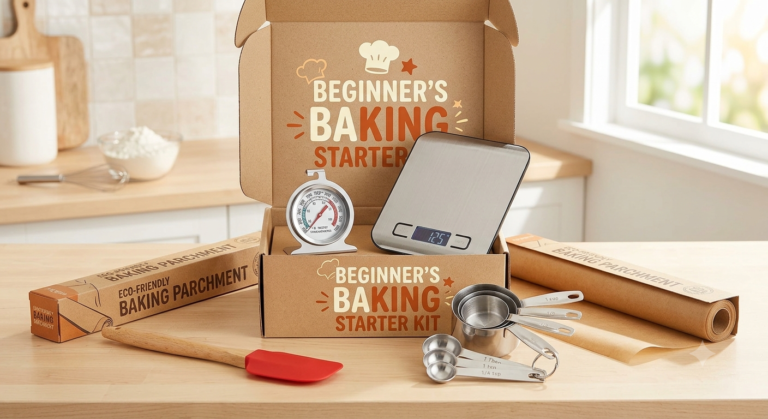
For more help building your baking setup from scratch, check out our beginner baking kit under $50 or our complete Essential Baking Tools for Beginners guide.
Happy baking, Clara Belle
Last updated: [DATE]. Prices fluctuate — always check current Amazon pricing before buying.