5 Baking Tools You’re Wasting Money On (And What to Buy Instead)
Quick Answer: Not every baking tool is worth your money. Some of the most popular products on Amazon actually make your baking worse or collect dust after one use. Here are 5 baking tools not worth buying — including dark nonstick pans, plastic measuring cups, single-use gadgets, cheap mixers you’ll outgrow in months, and overpriced silicone mold sets. Here’s what to skip and what to buy instead.
This post contains affiliate links. If you buy through them, I may earn a small commission at no extra cost to you — it’s what keeps this site running and lets me keep testing gear so you don’t have to.
Why I Wrote This Post
Most baking content tells you what to buy. This list covers the biggest baking tools not worth buying — everything I wish someone had told me before I wasted the money. Because one of the fastest ways to waste money in baking is buying tools that seem useful but actually cause problems, break quickly, or solve problems that don’t exist.
I’ve made every one of these mistakes myself. I’ve bought the shiny gadgets, the “top rated” Amazon picks, and the starter kits full of tools I never touched again. This list is everything I wish someone had told me before I wasted the money.
If you’d rather skip straight to the tools that are actually worth buying, check out our Essential Baking Tools for Beginners guide. But if you want to know what to avoid first, keep reading.
1. Dark Nonstick Baking Pans
Why people buy them: They’re everywhere. Walk into any store or browse Amazon and dark nonstick pans dominate the results. They look professional, they promise easy release, and they’re often sold in convenient sets at attractive prices.
Why they’re a waste: Dark pans absorb more heat than light pans. This means the bottoms of your cookies, cakes, and pastries get significantly hotter than the tops — leading to burnt bottoms, over-browned edges, and uneven baking. It’s the single most common cause of the “my cookies always burn on the bottom” problem.
On top of that, nonstick coatings wear off. Within 3 to 5 years of regular use, that “nonstick” surface starts sticking. Then you’re buying replacement pans all over again. You end up spending more over time on disposable pans than you would on one set of quality pans that last decades.
What to buy instead: Light-colored aluminum or aluminized steel pans. They reflect heat instead of absorbing it, bake evenly, and last 20+ years. A set of Nordic Ware Naturals half sheet pans will still be in your kitchen when your kids are baking on their own.
👉 Check current price: Nordic Ware Naturals Half Sheet on Amazon →
👉 Check current price: Umite Chef Half Sheet Pan on Amazon →
For the full science behind this, read our dark vs light baking pans comparison.
2. Plastic Measuring Cups and Spoons
Why people buy them: They come free with kitchen sets, they’re cheap to replace, and they seem like they do the same job as metal ones.
Why they’re a waste: Plastic measuring cups have three problems that silently sabotage your baking.
First, they warp. A few cycles through the dishwasher or exposure to hot ingredients and the cup changes shape slightly. A warped cup holds a different volume than it should — and you’d never notice by looking at it.
Second, the printed measurement lines fade. After a few months of washing, the “1/2 cup” line disappears and you’re guessing. Stainless steel cups have engraved markings that physically cannot fade because they’re cut into the metal.
Third, plastic is lightweight. It slides around on the counter, tips over easily, and doesn’t feel precise. This seems minor until you’re trying to level a cup of flour one-handed.
What to buy instead: Stainless steel measuring cups and spoons with engraved markings. They last forever, they’re dishwasher proof, and they feel like real tools instead of disposable ones.
👉 Check current price: TILUCK Stainless Steel Measuring Set on Amazon →
👉 Check current price: Spring Chef Stainless Steel Measuring Set on Amazon →
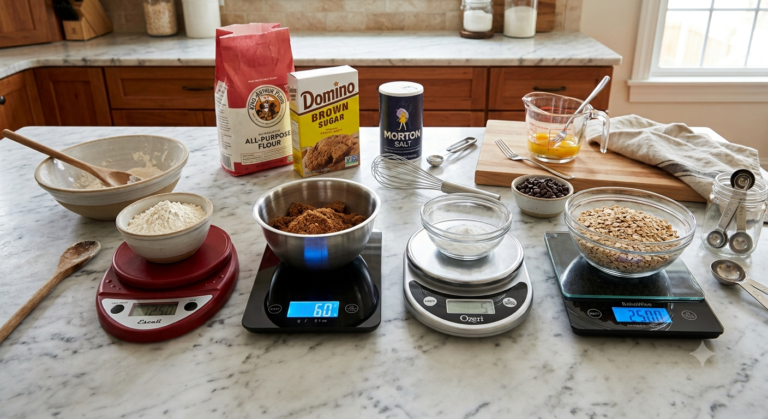
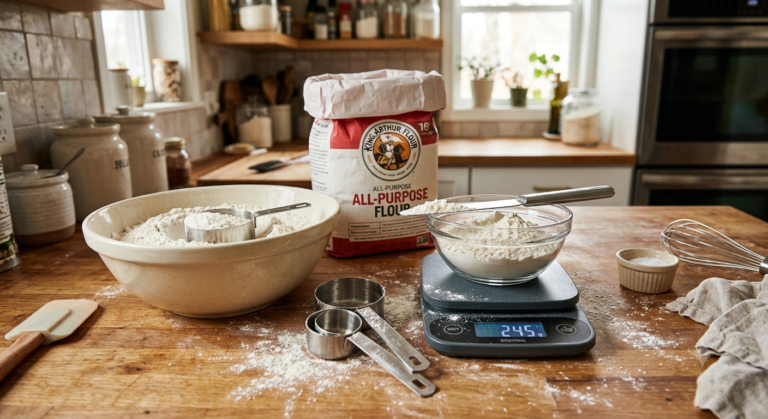
And if you really want to fix your measuring problems permanently, switch to weighing ingredients with a kitchen scale. It eliminates the cup vs. scale inconsistency entirely. Read our full breakdown: kitchen scale vs measuring cups.
3. Single-Use Gadgets
Why people buy them: They look clever on Amazon. A banana slicer. An avocado tool. A strawberry huller. A cookie scoop that only makes one size. They solve a hyper-specific problem and the product photos make them look indispensable.
Why they’re a waste: Every single-use gadget is a tool that does one job — a job that a knife, a spoon, or your hands already do perfectly well. They take up drawer space, they’re hard to clean, and after the novelty wears off, they sit in the back of a cabinet forever.
The worst offenders in baking are gadgets like:
Egg separators. Your hands are the best egg separator ever made. Crack the egg, pass the yolk back and forth between the shell halves, done. A gadget adds a step and a thing to wash.
Flour sifters with complicated mechanisms. A fine mesh strainer and a spoon do the same job faster with less cleanup. Mechanical sifters jam, break, and are annoying to clean.
Specialized cake levelers. A long serrated knife and a steady hand level a cake perfectly. The wire levelers sold on Amazon bend, wobble, and rarely cut straight.
Cookie stamps and press sets with 47 shapes. You’ll use three shapes. The other 44 will live in a bag in your junk drawer.
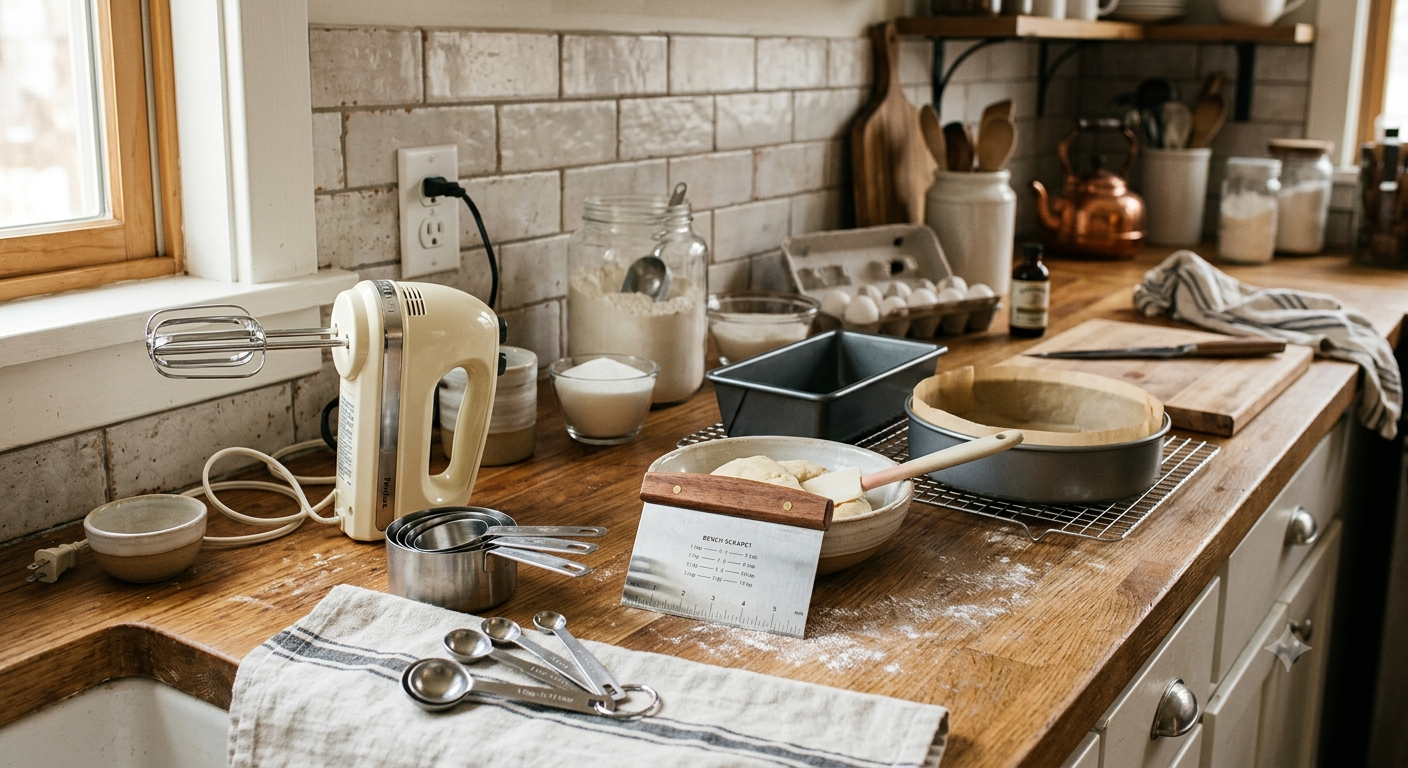
What to buy instead: Multi-purpose tools that handle dozens of jobs. A good bench scraper portions dough, scrapes counters, transfers chopped ingredients, and levels dry measurements — all for $10.
👉 Check current price: Spring Chef Bench Scraper on Amazon →
A silicone spatula set covers mixing, folding, scraping, and stirring — four functions that would otherwise require four separate tools.
👉 Check current price: ChefAide Silicone Spatula Set on Amazon →
4. The Cheapest Possible Mixer
Why people buy them: The price is tempting. A $25 stand mixer or a $12 hand mixer feels like a bargain, especially when you’re just starting out and don’t want to overspend.
Why they’re a waste: Ultra-cheap mixers have underpowered motors, flimsy plastic gears, and attachments that don’t reach the bottom of the bowl. They overheat during thick batters, struggle with cookie dough, and can’t handle bread dough at all. Most importantly, they break — often within months.
When a $25 mixer dies after three uses, you buy another one. Or worse, you buy a mid-range mixer that you should have bought first. Now you’ve spent $25 on the first one plus $80 on the replacement — $105 total for what should have been one $80 purchase.
The cheapest option is almost never the cheapest in the long run.
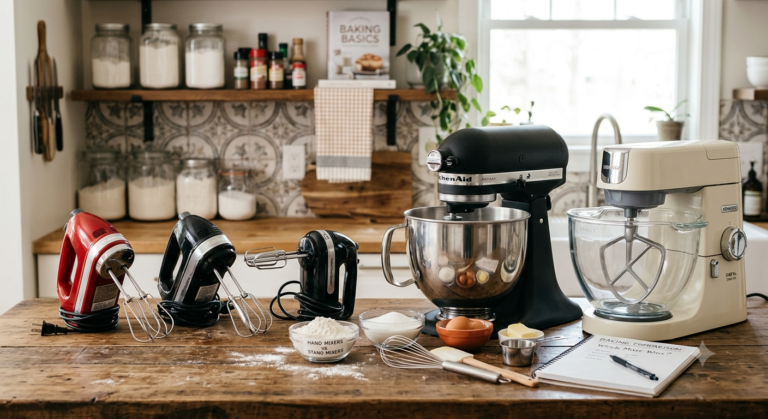
What to buy instead: If you’re on a tight budget, skip the stand mixer entirely and use a decent hand mixer until you’re ready to invest properly. A $20–25 Hamilton Beach hand mixer handles cookies, cakes, and whipped cream without pretending to be something it’s not.
👉 Check current price: Hamilton Beach Hand Mixer on Amazon →
When you’re ready for a stand mixer, invest in one that will last. Our best stand mixers under $300 guide compares every option from $60 to $290 with honest pros, cons, and a clear recommendation for every budget.
5. Silicone Mold Sets (the Giant Multi-Packs)
Why people buy them: Amazon is full of 30-piece silicone mold sets — bundt shapes, donut pans, cake pop molds, muffin trays, loaf pans — all for $20. It feels like you’re getting an entire bakery’s worth of equipment for the price of a single pan.
Why they’re a waste: Cheap silicone molds are the most deceptive products in baking. Here’s what actually happens:
They’re flimsy. Without structural support, they bend and wobble when you carry them to the oven. Batter spills. Cakes bake unevenly because the mold flexes on the oven rack.
They bake unevenly. Thin silicone doesn’t distribute heat the way metal does. The parts of the mold touching the rack get hot while the parts suspended in air stay cool. The result is cakes that are overdone on the bottom and underdone everywhere else.
You’ll use two shapes, maybe. A 30-piece set sounds amazing until you realize you only bake muffins and loaf cakes. The bundt molds, the donut pans, and the cake pop trays sit unused. You paid for 30 pieces and use 2.
The silicone quality is questionable. Ultra-cheap silicone molds often use lower-grade material that can retain odors, discolor quickly, and develop a sticky residue that’s hard to clean.
What to buy instead: One or two quality metal pans in the shapes you actually use. A Wilton or Fat Daddio’s round cake pan in aluminum will outperform any silicone mold and last 10 times longer.
👉 Check current price: Fat Daddio’s Round Cake Pan on Amazon →
The Rule That Saves Money
Understanding which baking tools are not worth buying comes down to one question before you add anything to your cart:
“Does this solve a specific problem I’ve actually had?”
If the answer is yes — buy the best version you can afford. If the answer is “no, but it looks useful” — close the tab.
The most effective baking setup isn’t the biggest one. It’s the smallest one where every tool earns its place. Five great tools will always outperform a drawer full of 25 mediocre ones.
What’s Actually Worth Buying
Now that you know which baking tools are not worth buying, here’s where to find the ones that actually solve real baking problems:
Just starting out? Our beginner baking kit under $50 gives you the five essential tools that fix the most common baking failures — for less than the cost of one of those 30-piece silicone mold sets.
Ready for the full setup? Our 10 Essential Baking Tools for Beginners covers everything from scales to stand mixers with budget, mid-range, and premium picks for each category.
Buy less. Buy better. Bake more.
Happy baking, Clara Belle
Last updated: [DATE]. Prices fluctuate — always check current Amazon pricing before buying.