Dark vs Light Baking Pans: The Real Difference (And Which 1 You Actually Need)
Quick Answer: If you bake cookies, cakes, or anything where even browning matters, you need light-colored aluminum pans. Dark pans absorb more heat and scorch the bottoms of baked goods before the tops are done — it’s the number one cause of burnt cookie bottoms. Light pans reflect heat and bake more evenly. For roasting vegetables or pizza where you want a crispy brown base, dark pans are actually the better choice. Most home bakers should start with light aluminum and add a dark pan later for savory cooking.
This post contains affiliate links for dark vs light baking pans. If you buy through them, I may earn a small commission at no extra cost to you — it’s what keeps this site running and lets me keep testing gear so you don’t have to.
The Science in 30 Seconds
Think about wearing a black T-shirt on a hot summer day versus a white one. The black shirt absorbs more heat from the sun and makes you feel hotter. A white shirt reflects that heat and keeps you cooler.
Baking pans work the exact same way.
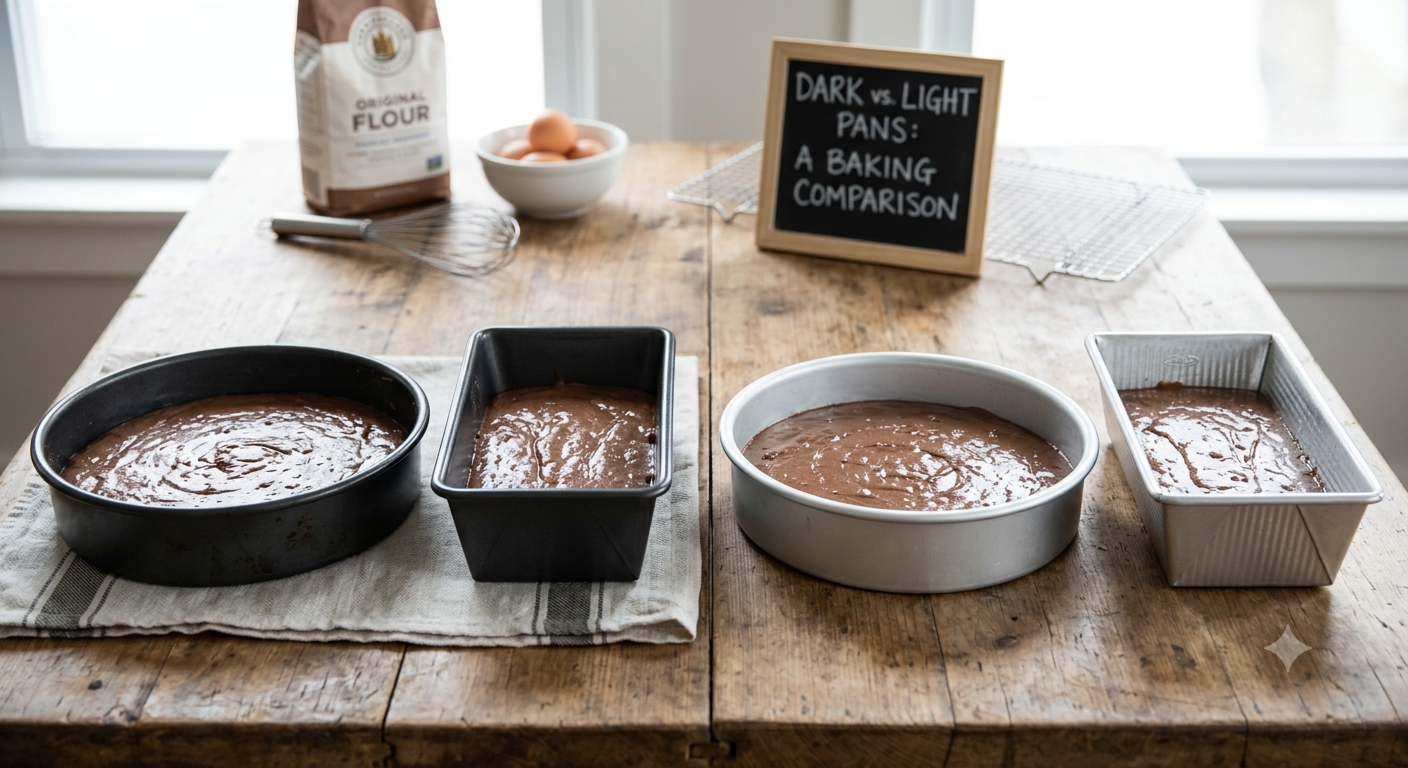
Dark pans (black, dark gray, dark nonstick) absorb more oven heat and radiate it directly into whatever is sitting on them. The bottom of your food gets hotter, faster.
Light pans (natural aluminum, silver, light gray) reflect oven heat and distribute it more gently and evenly. The top and bottom of your food bake at closer to the same rate.
That’s it. That’s the entire difference is the discussion of dark vs light baking pans. But the impact on your baking is enormous.
What Happens When You Bake Cookies on a Dark Pan
If you’ve ever pulled a tray of cookies out of the oven and found the bottoms burned dark brown while the tops were barely golden, your pan was almost certainly dark-colored. Here’s what’s happening:
The dark surface absorbs heat from the oven and concentrates it on the underside of your cookies. The bottoms start browning immediately while the tops are still raw. By the time the tops look done, the bottoms are scorched.
This creates a frustrating guessing game. Do you take them out early to save the bottoms, leaving the tops underdone? Or do you bake them until the tops are right and accept burnt bottoms? Neither option gives you a good cookie.
The fix isn’t better timing — it’s a better pan. When you switch to a light aluminum pan, the bottoms and tops bake at a similar rate. You stop playing the guessing game entirely.
If you’ve been dealing with this exact problem, our guide on why cookies burn on the bottom breaks down all five causes and fixes — including oven temperature, rack position, and pan liners.
What Happens When You Bake a Cake in a Dark Pan
The same physics apply, but the results show up differently with cakes:
Over-browning on the edges. The sides and bottom of the cake set too quickly from the extra heat, creating a thick, dark crust while the center is still liquid.
Doming. Because the edges set first, the still-liquid center has nowhere to go but up — creating a domed top instead of a flat, stackable layer.
Shorter bake window. A dark pan bakes faster, which means your window between “underdone” and “overdone” is smaller. You have less room for error.
King Arthur Baking recommends reducing oven temperature by 25°F when using dark pans for cakes. But why fight your pan when you could just use the right one?
When Dark Pans Are Actually Better
Dark pans aren’t bad — they’re just bad for the wrong job. Here’s when you should actually choose a dark pan:
Roasting vegetables. You want those Brussels sprouts and carrots to get caramelized and crispy on the bottom. A dark pan delivers that brown, flavorful crust faster.
Pizza. A dark pan or dark pizza stone gives you that crispy, well-browned crust that makes homemade pizza taste like it came from a pizzeria.
Cornbread. That golden-brown bottom crust is the best part. A dark cast iron skillet or dark pan makes it happen.
Anything where browning is the goal. If the recipe wants a crispy, browned base, reach for the dark pan.
The rule of thumb is simple: delicate baking (cookies, cakes, pastries) → light pan. Savory roasting and crispy-bottom baking → dark pan.
The Best Light Baking Pans (What to Buy)
If you’re switching from dark pans to light, here are the ones worth buying — the same pans we recommend in our Essential Baking Tools for Beginners guide.
Sheet Pans (for cookies, sheet cakes, roasting)
| Tier | Product | Approx. Price | Best For |
|---|---|---|---|
| 💰 Budget | Umite Chef Natural Aluminum Half Sheet Pan (2-pack) | ~$15–18 | Starting out, great value |
| 💰💰 Mid-Range | Nordic Ware Naturals Half Sheet (2-pack) | ~$30–40 | The gold standard. Buy this. |
| 💰💰💰 Premium | USA Pan Bakeware Half Sheet | ~$25–35 each | Aluminized steel, slight nonstick |
Budget pick — Umite Chef: Natural aluminum with a reinforced steel rim to prevent warping. You get two pans for the price, and they bake cookies evenly right out of the box. A massive upgrade over any dark nonstick pan.
👉 Check current price: Umite Chef Half Sheet Pan on Amazon →
Mid-range pick — Nordic Ware Naturals: This is the pan that professional bakers, food bloggers, and test kitchens use. Heavy-gauge natural aluminum, made in the USA, with an encapsulated galvanized steel rim that prevents warping. It bakes more evenly than any other sheet pan I’ve used and it will last 20+ years. If you buy one pan from this article, make it this one.
👉 Check current price: Nordic Ware Naturals Half Sheet on Amazon →
Premium pick — USA Pan: Built on aluminized steel — which combines aluminum’s even heating with steel’s strength and rigidity. Features a subtle corrugated surface for improved airflow and a light silicone-based nonstick coating (PTFE and BPA free). Slightly heavier than pure aluminum pans but extremely durable.
Round Cake Pans
| Tier | Product | Approx. Price | Best For |
|---|---|---|---|
| 💰 Budget | Wilton Performance Pans Aluminum Round 9″ 2-pack | ~$15-17 | Beginners |
| 💰💰 Mid-Range | Fat Daddio’s Anodized Aluminum Round 9″ 2-pack | ~$25-30 | The cake decorator’s favorite |
| 💰💰💰 Premium | USA Pan Round Cake Pan | ~$25-28 each | Nonstick aluminized steel |
Budget pick — Wilton: Solid entry-level aluminum cake pan. Bakes far more evenly than any dark nonstick pan. Use a parchment round on the bottom for easy release.
Mid-range pick — Fat Daddio’s: Ask any cake decorator what pan they use. This is it. Anodized aluminum heats evenly, releases cleanly with parchment, and the straight sides give you perfectly shaped layers for stacking. This is the pan that will make your cakes look like they came from a bakery.
Premium pick — USA Pan: Same aluminized steel construction as their sheet pans, with a light nonstick coating for easy release without parchment. Extremely durable.
“But I Already Have Dark Pans — Do I Have to Replace Them?”
No. You have three options if you’re not ready to buy new pans:
Option 1 — Lower the temperature by 25°F. If a recipe says 350°F, set your oven to 325°F. This compensates for the extra heat absorption. Start checking for doneness 5–10 minutes before the recipe says.
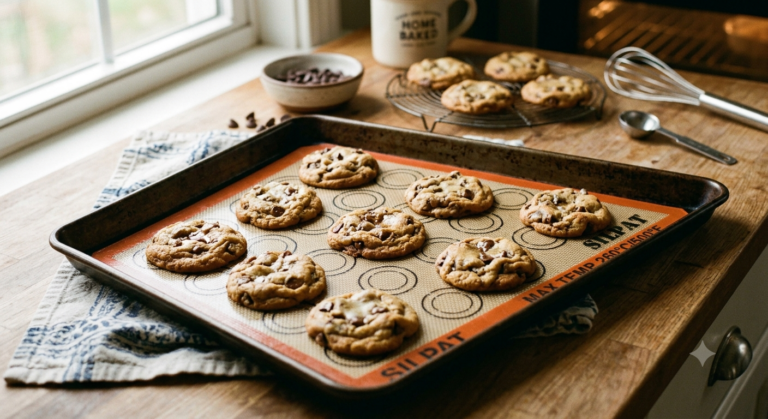
Option 2 — Use a silicone baking mat. A silicone mat between the dark pan and your cookies creates a heat buffer that reduces bottom browning. It won’t fully solve the problem, but it helps significantly.
👉 Check current price: OXO Good Grips Silicone Baking Mat on Amazon →
👉 Check current price: Silpat Premium Baking Mat on Amazon →
Option 3 — Double-pan it. Stack two sheet pans together and bake on the top one. The air pocket between the pans insulates the bottom of your food. This is an old bakery trick that works surprisingly well.
All three options are workarounds though. If baking is something you do regularly, light aluminum pans are worth the investment — and they’re cheaper than most dark nonstick pans anyway.
Side-by-Side Comparison: Dark vs Light Baking Pans
| Factor | Dark Pans | Light Pans |
|---|---|---|
| Heat absorption | High — absorbs and radiates heat | Low — reflects heat |
| Cookie bottoms | Burn easily | Even, golden brown |
| Cake edges | Over-brown, thick crust | Even browning, thinner crust |
| Bake time | Faster (shorter error window) | Standard (more forgiving) |
| Best for | Roasting, pizza, cornbread | Cookies, cakes, pastries |
| Durability | Nonstick coatings wear off in 3–5 years | Bare aluminum lasts 20+ years |
| Price | Often $15–30 | Often $10–35 |
| Maintenance | Some dishwasher safe | Hand wash recommended |
What About Nonstick Pans?
Most nonstick pans happen to be dark-colored, which means they have the same heat absorption problem. But the nonstick coating adds another issue: it wears off.
A typical nonstick coating lasts 3–5 years of regular use before it starts degrading. Once it does, food sticks again and the pan is essentially disposable. You end up buying new pans every few years.
Bare aluminum pans with parchment paper or a silicone mat give you better nonstick performance than any coating — and the pan itself lasts decades. You’re paying less upfront for a pan that outlasts the nonstick version five times over.
The one exception: If you hate the idea of using parchment or a mat and want true walk-away nonstick, the USA Pan’s silicone-based coating is the best compromise. It’s lighter-colored than most nonstick (so less heat absorption), PTFE-free, and more durable than traditional nonstick coatings.
What I Actually Have in My Kitchen
Here’s my honest setup:
- 2 Nordic Ware Naturals half sheets — for cookies, sheet cakes, and everyday baking
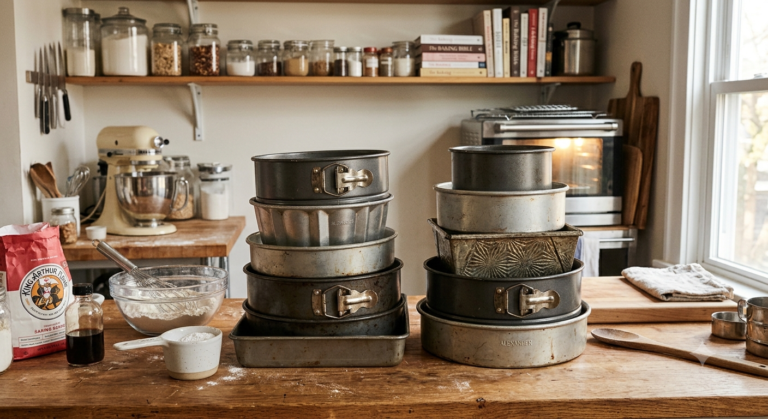
- 2 Fat Daddio’s 9-inch round cake pans — for layer cakes
- 1 dark sheet pan — reserved exclusively for roasting vegetables and making pizza
That’s it. Five pans total. The light pans handle 90% of my baking, and the single dark pan handles the savory stuff where I actually want browning. You don’t need 15 pans — you need the right 5.
The Bottom Line
The difference between dark vs light baking pans isn’t a minor preference — it’s the difference between consistent, evenly baked results and a frustrating cycle of burnt bottoms and guesswork.
If you take one thing away from this post: for cookies, cakes, and pastries, switch to light-colored aluminum pans. It’s one of the cheapest upgrades you can make, and the results are immediate and dramatic.
Start with a set of Nordic Ware Naturals half sheets and a pair of Fat Daddio’s round cake pans. That covers almost everything a home baker needs.
And if you’re still troubleshooting burnt cookies specifically, check out our complete guide: Why Your Cookies Burn on the Bottom (And How to Fix It for Good).
Happy baking, Clara Belle
Last updated: [DATE]. Prices fluctuate — always check current Amazon pricing before buying.