How to Stock a Baking Pantry on a Budget (The 12 Things You Actually Need)
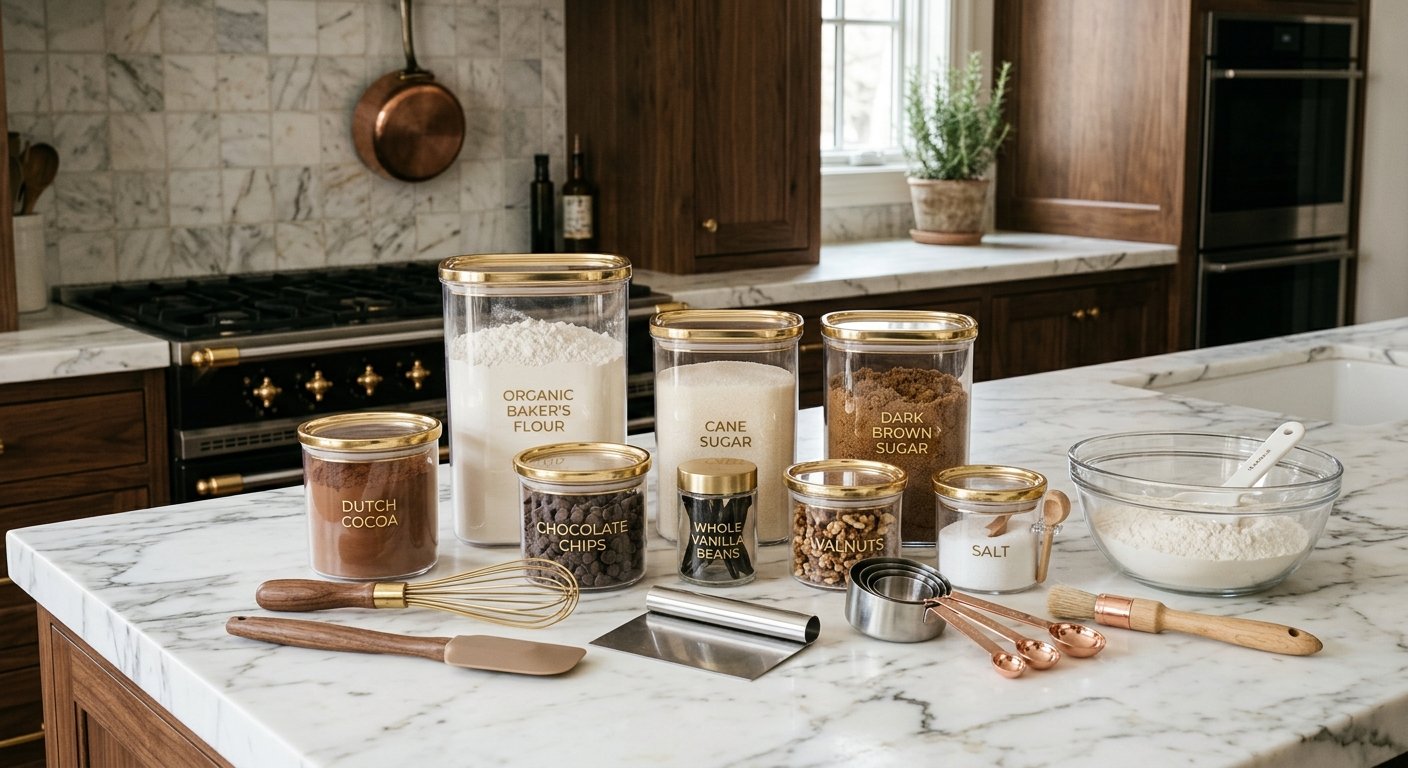
Quick Answer: You can stock a baking pantry on a budget for about $30–40 with just 12 essential ingredients that cover cookies, cakes, muffins, brownies, banana bread, and basic bread. Buy all-purpose flour, granulated sugar, brown sugar, butter, eggs, baking powder, baking soda, vanilla extract, salt, vegetable oil, cocoa powder, and chocolate chips. Skip everything else until a specific recipe calls for it. Most of these staples last months in your pantry, so the upfront cost pays for dozens of bakes.
This post contains affiliate links. If you buy through them, I may earn a small commission at no extra cost to you — it’s what keeps this site running and lets me keep testing gear so you don’t have to.
The Mistake That Wastes Money Before You Even Start
Walk into the baking aisle and you’ll find 200+ ingredients staring back at you — specialty flours, flavored extracts, decorating sugars, cake mixes, pie fillings, fondant, food coloring, sprinkles, and bags of things you’ve never heard of. It’s overwhelming, and the natural impulse is to buy a bunch of stuff “just in case.”
Don’t do that. Half of it will sit in your cabinet untouched for a year until you throw it out.
The truth is that the vast majority of beginner baking recipes use the same 12 ingredients in different combinations. Chocolate chip cookies, vanilla cake, banana bread, brownies, muffins, pancakes — all built from the same foundation. Stock that foundation and you can bake dozens of different things without a single extra trip to the store.
The 12 Essentials Needed To Stock A Baking Pantry On A Budget
Tier 1: The Non-Negotiables (~$20–25)
These six ingredients appear in almost every baking recipe. Without them, you can’t bake much of anything.
1. All-Purpose Flour (~$3–5 for a 5 lb bag)
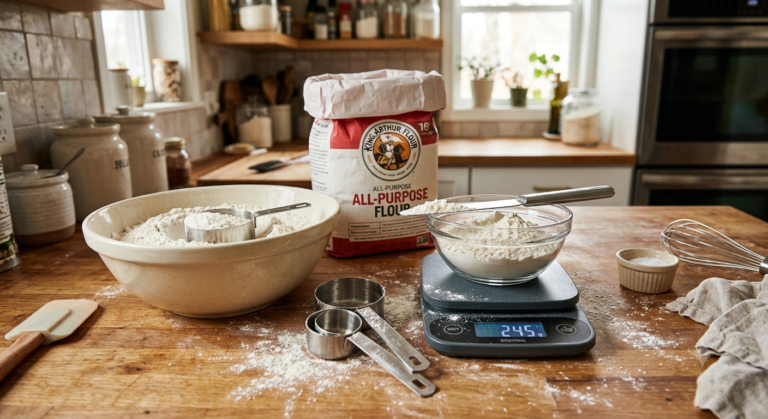
The foundation of baking. All-purpose flour works for cookies, cakes, muffins, brownies, quick breads, pie crust, pancakes, and basic yeast bread. You don’t need bread flour, cake flour, or self-rising flour to start — all-purpose handles everything at the beginner level.
How to store it: Airtight container or sealed bag in a cool, dry spot. Lasts 6–12 months in the pantry, up to 2 years in the freezer.
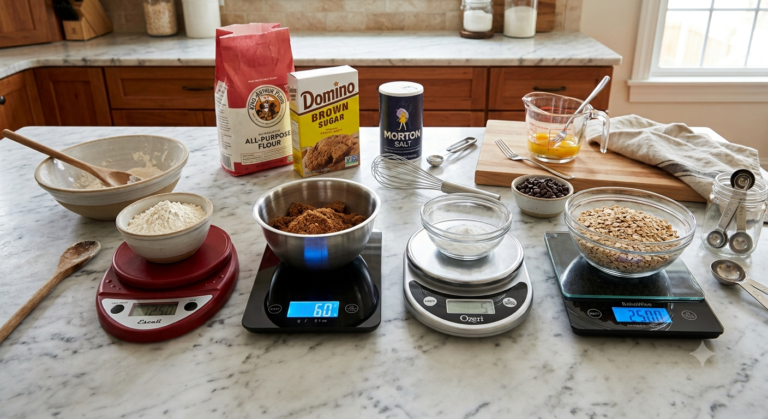
Critical reminder: Weigh your flour instead of scooping with cups. A kitchen scale eliminates the number one cause of inconsistent baking results.
→ Check current price: Etekcity Kitchen Scale on Amazon
2. Granulated White Sugar (~$3–4 for a 4 lb bag)
Sweetens, adds moisture, helps browning, and affects texture. White sugar produces crispier cookies and a more delicate crumb in cakes. Combined with brown sugar, it covers every sweetening need a beginner has.
How to store it: Airtight container. Sugar lasts essentially forever if kept dry — it doesn’t expire.
3. Light Brown Sugar (~$3–4 for a 2 lb bag)
Brown sugar is white sugar with molasses added back in. It adds moisture, chewiness, and a deeper flavor. The difference between white and brown sugar is one of the biggest levers for controlling cookie texture — more brown sugar means chewier results.
How to store it: Airtight container or resealable bag with the air pressed out. Brown sugar dries out and hardens quickly if exposed to air. If it does harden, place a slice of bread in the container overnight — the sugar absorbs the moisture and softens back up.
4. Unsalted Butter (~$4–5 for 1 lb / 4 sticks)
Flavor, moisture, tenderness, and flakiness — butter does it all. Always buy unsalted so you control the salt level in your recipes. Most baking recipes assume unsalted butter and add salt separately.
How to store it: Fridge for up to 1 month, freezer for up to 6 months. Butter freezes beautifully — buy extra when it’s on sale and freeze it.
Why room temperature matters: Many recipes call for “room temperature butter.” This means cool to the touch but pliable — not melted, not cold and hard. Take it out 30–45 minutes before baking. We covered why butter temperature matters in our guides on dense cakes and chewy vs crispy cookies.
5. Eggs (~$3–5 for a dozen)
Structure, moisture, richness, and leavening. Eggs do more in baking than any other single ingredient. Most recipes use large eggs — if yours doesn’t specify, assume large.
How to store it: Fridge, in the original carton (not the door — the door is the warmest part of the fridge).
Room temperature tip: Many recipes call for room temperature eggs. Set them on the counter 20–30 minutes ahead, or place cold eggs in a bowl of warm (not hot) water for 10 minutes.
6. Salt (~$1–2 for a canister)
Salt isn’t just for flavor — it strengthens gluten, controls yeast activity, and balances sweetness. Even sweet recipes need salt. A batch of cookies without salt tastes flat and one-dimensional.
What to buy: Fine table salt or fine sea salt. Both dissolve evenly in batter. Avoid coarse salt for baking — it doesn’t distribute evenly and can leave salty pockets.
How to store it: Anywhere dry. Salt doesn’t expire.
Tier 2: The Flavor Builders (~$8–12)
These four ingredients dramatically expand what you can bake.
7. Pure Vanilla Extract (~$5–8 for a 4 oz bottle)
Appears in almost every sweet baking recipe. Vanilla rounds out flavors, reduces the perception of egginess, and adds depth to everything from cookies to cakes to frosting.
Buy pure, not imitation. Pure vanilla extract costs more but the flavor difference is significant, especially in recipes where vanilla is the star (vanilla cake, sugar cookies, buttercream). Imitation vanilla is fine for recipes where chocolate or other strong flavors dominate.
How to store it: Cool, dark cabinet. Lasts 3–5 years.
8. Baking Powder (~$2–3 for a can)
A chemical leavener that makes cakes rise, muffins puff, and biscuits fluff. Most baking powder is “double-acting” — it releases gas twice, once when mixed and again when heated. This gives you a wider window between mixing and baking.
Critical: Baking powder expires. Test it before baking by dropping a teaspoon into hot water — if it fizzes vigorously, it’s good. If it barely reacts, replace it. We covered this in our guides on dense cakes and dry muffins.
How to store it: Airtight in a cool, dry cabinet. Replace every 6–12 months after opening.
9. Baking Soda (~$1 for a box)
Another leavener, but different from baking powder. Baking soda is pure sodium bicarbonate — it needs an acid (like buttermilk, brown sugar, yogurt, or chocolate) to activate. It creates a slightly different rise and browning than baking powder.
Many cookie recipes use baking soda instead of (or alongside) baking powder because it promotes browning and spread.
How to store it: Sealed in a cool, dry spot. Replace every 6 months after opening. Test by dropping a teaspoon into vinegar — vigorous bubbling means it’s active.
10. Vegetable Oil or Canola Oil (~$3–4 for a bottle)
Some recipes use oil instead of butter for a moister, denser result. Brownies, some cakes (like oil-based chocolate cake), muffins, and quick breads often call for oil. It also greases pans when you don’t want to use butter.
How to store it: Cool, dark cabinet. Lasts up to a year.
Tier 3: The Chocolate Essentials (~$5–8)
If you bake anything chocolate — and you will — these two ingredients are indispensable.
11. Unsweetened Cocoa Powder (~$3–5 for a canister)
The base of brownies, chocolate cake, chocolate frosting, and hot chocolate. Dutch-process cocoa has a smoother, mellower flavor. Natural cocoa (like Hershey’s) is more acidic and works with baking soda for leavening. Either works for beginners — just use whichever your recipe specifies.
How to store it: Airtight container in a cool, dry cabinet. Lasts 2–3 years.
12. Chocolate Chips (~$3–4 for a 12 oz bag)
Chocolate chip cookies are the most popular home baking recipe in America for a reason. A bag of semi-sweet chocolate chips also works for melting into ganache, folding into brownie batter, or snacking while you bake.
How to store it: Cool, dry cabinet. Lasts up to 2 years unopened, 2–4 months after opening.
The Complete Budget Baking Pantry at a Glance
| Ingredient | Approx. Cost | Lasts |
|---|---|---|
| All-purpose flour (5 lb) | ~$3–5 | 6–12 months |
| Granulated sugar (4 lb) | ~$3–4 | Indefinitely |
| Light brown sugar (2 lb) | ~$3–4 | 6+ months if sealed |
| Unsalted butter (1 lb) | ~$4–5 | 1 month fridge, 6 months freezer |
| Eggs (dozen) | ~$3–5 | 3–5 weeks |
| Salt | ~$1–2 | Indefinitely |
| Pure vanilla extract (4 oz) | ~$5–8 | 3–5 years |
| Baking powder | ~$2–3 | 6–12 months |
| Baking soda | ~$1 | 6 months |
| Vegetable oil | ~$3–4 | Up to 1 year |
| Cocoa powder | ~$3–5 | 2–3 years |
| Chocolate chips (12 oz) | ~$3–4 | 2–4 months opened |
| Total | ~$35–49 |
That’s everything you need to bake chocolate chip cookies, sugar cookies, brownies, banana bread, vanilla cake, chocolate cake, muffins, pancakes, biscuits, and basic yeast bread. One shopping trip, under $50, covers weeks or months of baking.
What You Don’t Need to Buy Yet
Skip these until a specific recipe calls for them:
Bread flour. All-purpose works fine for beginner yeast bread. Bread flour has more protein for chewier, higher-rising loaves — upgrade when you’re baking bread regularly.
Cake flour. All-purpose produces perfectly good cakes. Cake flour has less protein for a more tender crumb — add it when you want to refine your cake texture.
Self-rising flour. It’s just all-purpose flour with baking powder and salt pre-mixed. You already have all three separately.
Cream of tartar. Only needed for specific recipes like snickerdoodles or stabilized meringue. Buy it when a recipe calls for it.
Almond flour, coconut flour, oat flour. Specialty flours for specific dietary needs or recipes. Not beginner essentials.
Food coloring, sprinkles, fondant. Decorating supplies. Learn to bake things that taste good before you worry about making them look fancy.
Yeast. Only needed for yeast bread, pizza dough, and rolls. If you’re not making those yet, skip it. When you’re ready, our bread won’t rise guide covers everything you need to know about yeast.
How to Save Money on Baking Ingredients
Buy store brands. Store-brand flour, sugar, and butter are virtually identical to name brands. The difference in performance is undetectable in blind taste tests. Save the brand-name premium for specialty items like vanilla extract where quality genuinely matters.
Buy butter on sale and freeze it. Butter is one of the most expensive staples. When it goes on sale, buy several pounds and freeze them — butter freezes perfectly for up to 6 months.
Buy in bulk only what you’ll use. A 25-pound bag of flour is a great deal if you bake weekly. It’s a waste if you bake twice a month and the flour goes stale before you finish it. Match your quantities to your baking frequency.
Check expiration dates on leavening. Baking powder and baking soda are cheap, but expired leavening wastes every other ingredient in the recipe. Test them before starting a bake — a failed batch of cookies costs more than a new can of baking powder.
Don’t buy mixes. A box of brownie mix costs $3–4 and makes one batch. The same $3–4 of pantry staples (flour, sugar, cocoa, oil, eggs) makes three to four batches. Mixes are more expensive per bake and you learn nothing from using them.
The Tools That Make Your Pantry Work
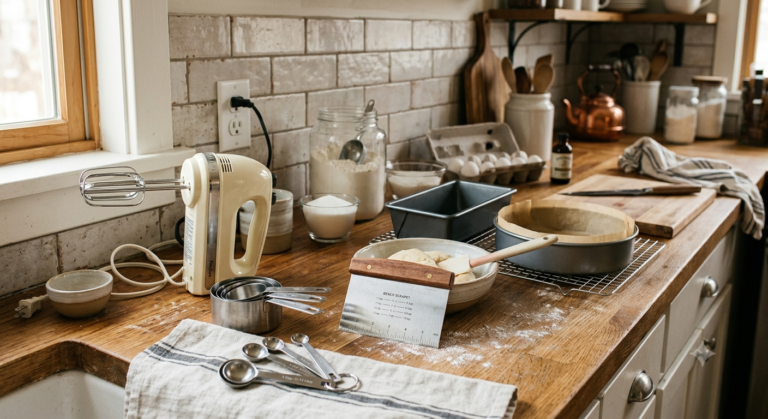
Having the right ingredients is half the equation. Having the right tools to measure and bake with them is the other half. The three most important:
Kitchen scale (~$13) — weighs flour accurately so every recipe works the same way every time. The single most impactful tool for consistent baking.
→ Check current price: Etekcity Kitchen Scale on Amazon
Oven thermometer (~$8) — reveals your oven’s true temperature so your bakes cook correctly. Fixes burnt cookies, flat cakes, and underdone bread.
→ Check current price: Rubbermaid Oven Thermometer on Amazon
Stainless steel measuring spoons (~$12) — accurate measurements for leavening, salt, and extracts that are too small for a scale.
→ Check current price: Cuisipro Measuring Spoons on Amazon
For the complete tool setup, check out our beginner baking kit under $50 or our full baking essentials checklist.
What Each Ingredient Actually Does
Understanding why each ingredient matters helps you troubleshoot problems and eventually start adapting recipes:
| Ingredient | Role in Baking |
|---|---|
| Flour | Structure — holds everything together |
| Sugar | Sweetness, moisture, browning, tenderness |
| Brown sugar | Same as white + adds moisture and chew (from molasses) |
| Butter | Flavor, moisture, tenderness, flakiness |
| Eggs | Structure, moisture, richness, leavening |
| Salt | Flavor balance, gluten strength, yeast control |
| Vanilla | Flavor depth, rounds out sweetness |
| Baking powder | Leavening — makes things rise (needs heat) |
| Baking soda | Leavening — makes things rise (needs acid) |
| Oil | Moisture, density (moister than butter in some recipes) |
| Cocoa powder | Chocolate flavor, color, slight dryness |
| Chocolate chips | Chocolate flavor, melty pockets of richness |
When a recipe fails, checking whether you have the right amount of each ingredient — and understanding what that ingredient does — usually reveals the problem. Our guides on why cakes are dense, why cookies burn, and why muffins are dry all trace failures back to ingredient ratios and measurements.
The Bottom Line
You can stock a baking pantry on a budget for about $35–50 with just 12 ingredients that cover dozens of recipes. You don’t need specialty flours, exotic extracts, or decorating supplies to start baking well — you need the fundamentals, measured accurately, baked at the right temperature.
Start with Tier 1 (the six non-negotiables for about $20). Add Tier 2 (flavor builders for $8–12) when you’re ready for more variety. Add Tier 3 (chocolate essentials for $5–8) when you want to make brownies and chocolate cake — which will be approximately five minutes after you start baking.
Pair your stocked pantry with the right tools from our Essential Baking Tools for Beginners guide, and you have everything you need to bake confidently from day one.
Happy baking, Clara Belle
Last updated: [DATE]. Prices fluctuate — ingredient prices vary by region and store.